
Cibola County Mugshot Sources
Cibola County’s official detention and sheriff navigation has no verified current-custody roster, released tab, photo gallery, booking archive, or jail mobile app. The SheriffAlerts link leads to a sex-offender registry, not to county jail mugshots. This makes a records request the main route for a county-created booking image. State, registry, and federal images must be sought from the agency that owns them.
| Channel | Photo status | How to access |
|---|---|---|
| County release roster | No official Cibola feed or photo field was found | Do not substitute a commercial roster |
| County booking record | An image may exist; disclosure is not guaranteed | Send a narrow county IPRA request |
| NMCD record | Public search photo behavior was not verified | Request a releasable identification photograph through NMCD |
| Most Wanted PDF | Headshots appear for selected absconders | Use only for the wanted status and date shown |
| Sex-offender registry | May show a qualifying registrant’s image | Use the official registry, never as a general release list |
| News or official release | May carry a dated arrest image | Read the date and source; it does not prove later release |
Request Cibola County Booking Photos
The Cibola County transparency page explains the Inspection of Public Records Act process. A written request should identify one booking with reasonable detail and ask for the booking photograph separately. The county form seeks the requester’s name, date, address, telephone number, a particular description, and whether inspection or copies are wanted.
- Identify the person, approximate booking date, case number, and booking number if known.
- Ask for the nonexempt booking sheet and booking photograph for that booking. Request electronic delivery.
- Also ask for the custody and release log when the photo must be tied to a release event.
- State that exempt parts may be redacted or separated while the remainder is produced.
- Confirm any fee before ordering and retain the custodian’s written response.
The county form lists no inspection fee, $1 per legal or letter page or computer printout, and actual cost for large plats. Current practice and the transparency page control if an older PDF differs. New Mexico law bars a fee merely for deciding whether a record is public.
The captured county source shows the local request route used for release records and booking photographs.
Open Cibola County’s IPRA instructions.
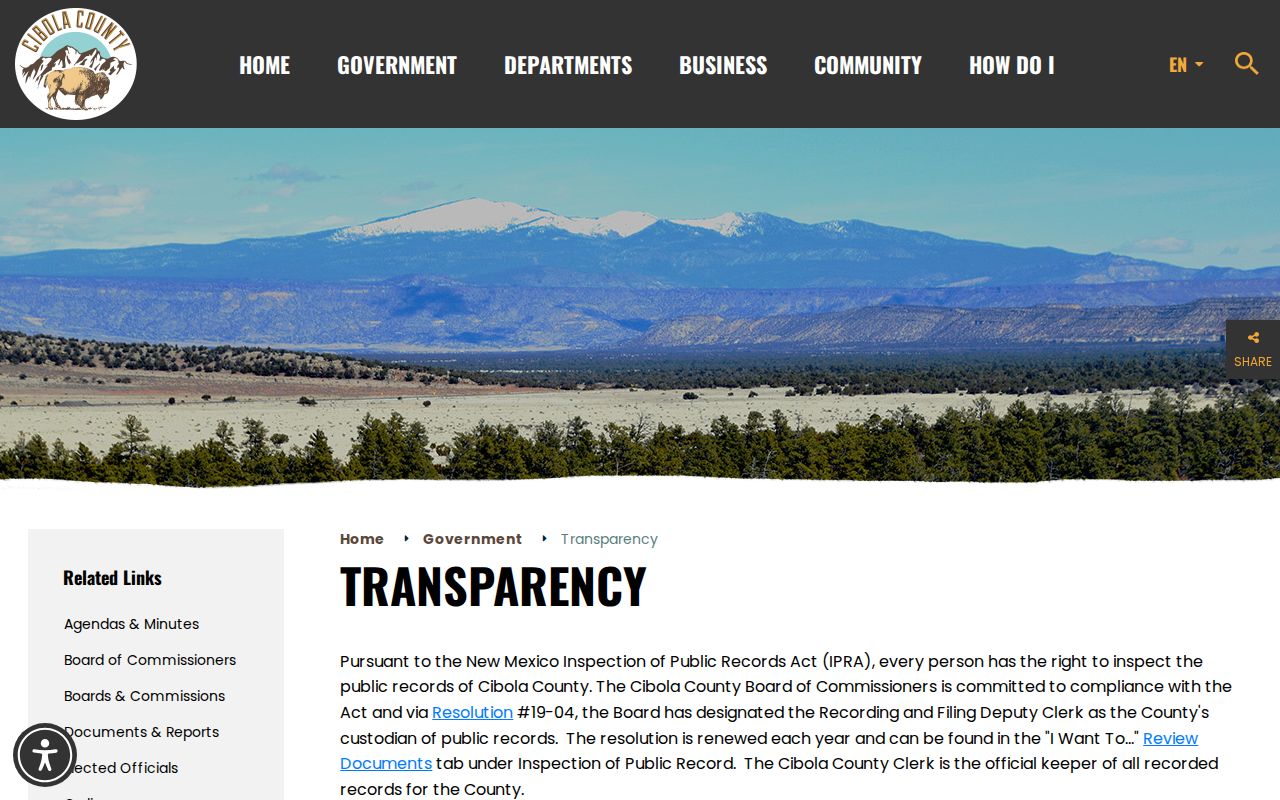
The process supports a focused request, while exemptions, redaction, retention, or expungement may still limit the result.
A photo request is stronger when it separates identity from custody outcome. Ask for the image tied to one booking, then ask for the release or transfer log as a different item. If the custodian uses a code, request the code definition. This avoids treating the image date as an exit date and lets the office produce a nonexempt photograph even if another part of the booking file needs redaction. If the response says no image is retained, preserve that answer rather than replacing it with an unattributed online copy.
Cibola County Mugshot Meaning
A booking photograph shows that an agency made an image in connection with custody. It does not show that a charge led to conviction. It also does not establish when the person left, whether the person was transferred, or whether a different agency still holds custody. A photo from the former McBride Road jail can remain online long after that facility closed.
Join the image to its source booking. Then read the court docket and actual release or transfer record. The most useful county request asks for admission and release times, coded release reason, authorizing court or agency, and destination or receiving agency. That distinction matters at Cibola County Correctional Center because the building has held county, USMS, and ICE populations under different legal authorities.
NMCD Photos After Cibola Release
A person transferred from a Cibola County case into state prison moves into NMCD records. The public NMCD Offender Search covers people incarcerated or under probation or parole, but it has no jurisdiction over ordinary county detention. During research, reCAPTCHA prevented verification of whether an inactive result keeps a photograph. Do not expect a particular image field without checking the live result.
For a state identification image, use NMCD NextRequest and ask for the releasable photograph tied to the correct offender number. The same request may seek the actual release or discharge date, last institution, and parole status. NMCD identifies this portal as its only regularly monitored online request avenue.
Absconder and Most Wanted PDFs are a separate channel. They include selected headshots, but those people are published due to wanted or absconder status, not because they form a list of ordinary Cibola County releases. A point-in-time PDF may be stale after agency action.
Cibola County Registry Images
The New Mexico sex-offender registry may display an image and registered information for a qualifying person after release. It is maintained through DPS and county sheriff processes. The registry does not cover all released inmates, not every person convicted of a sex offense must appear publicly, and a missing result proves nothing about custody or release.
Use the New Mexico DPS Law Enforcement Records Bureau route and read its limits before following the registry link. DPS lists dps.sorna@dps.nm.gov and 505-476-2444 for registry questions. A registry photograph is not the same record as the jail booking photo and cannot supply the jail exit time.
The official route and cautions are visible in the captured state source.
Review the authoritative New Mexico registry route.
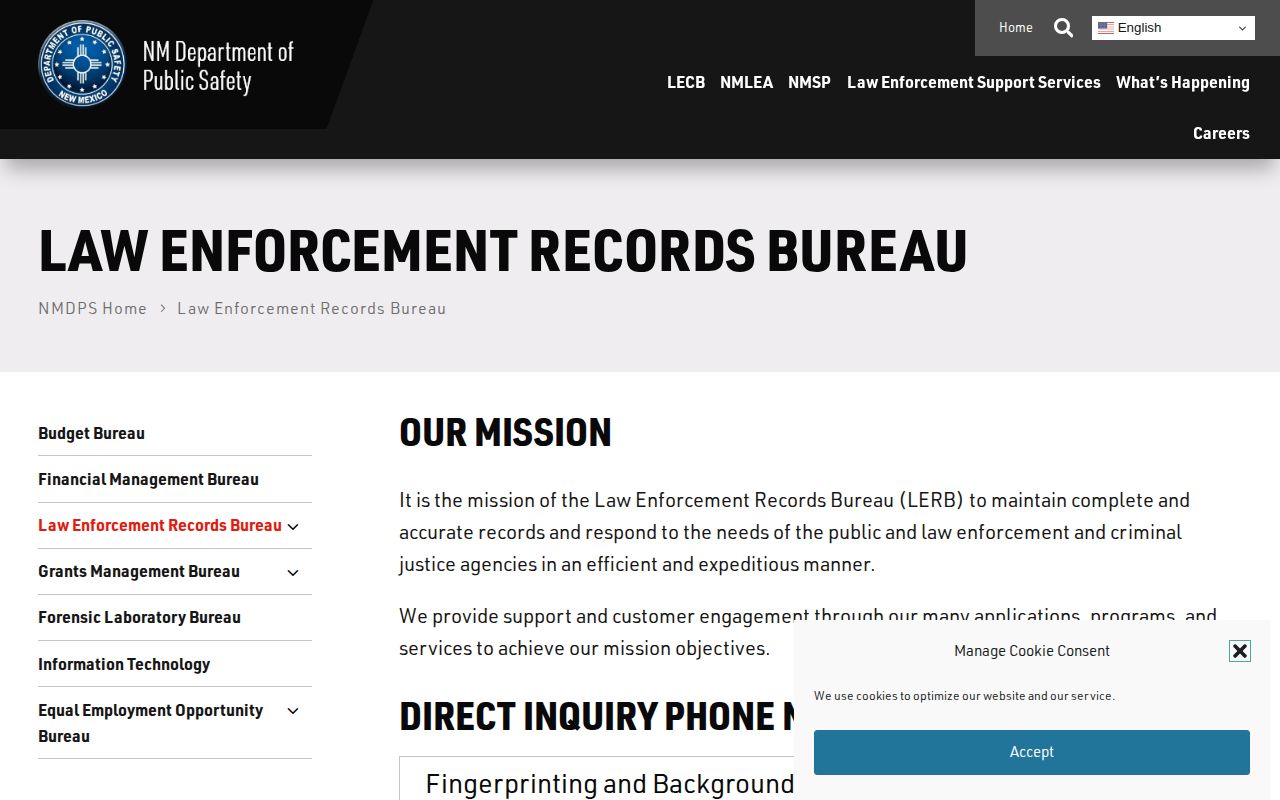
The source confirms the correct agency path while keeping registry status separate from a county release record.
Expunged Cibola County Mugshots
New Mexico expungement is unusually relevant to booking photos. The judiciary’s expungement guide says arrest records include photographs, fingerprints, and booking sheets. Covered public records also include corrections, court, and law-enforcement web entries about an arrest, case, disposition, dismissal, or discharge. Expungement removes general-public access, though it does not always destroy every agency record or bar criminal-justice access.
For a release without conviction, such as an acquittal, dismissal, no bill, nolle prosequi, or a covered discharge, the guide generally provides a one-year period from final disposition. Wrong-identity relief may be sought at any time. Conviction petitions have sentence-completion requirements, tiered waiting periods, and exclusions. The district court where the records began handles the petition even when the source matter came from a lower court. The guide lists a $132 filing fee and an indigency-waiver process; verify the current amount before filing.
After expungement, agencies generally answer public questions as though the record does not exist. A commercial copy may persist even when the official public record changes. That mismatch is a reason to rely on the custodian and court order, not to amplify a third-party image.
Cibola County Photo Record Law
New Mexico IPRA, NMSA 1978 §§14-2-1 and following, favors broad access while preserving named exemptions. A written request starts the formal process. If a record is not available within three business days, the custodian provides timing information in writing. The ordinary production or denial period is generally 15 calendar days, though a broad or burdensome request can take additional reasonable time with notice.
No official source in the research sweep declared every New Mexico booking photograph categorically public. Nor did the sweep verify a New Mexico law that requires proactive mugshot publication or a specific anti-pay-to-remove rule. The supported position is narrower: IPRA governs requests subject to exceptions, and the expungement act expressly reaches booking photographs. Juvenile, sealed, expunged, and exempt material should not be sought or shared as though it were open.
IPRA also requires reasonable particularity. A request for every photograph ever held by a facility may be treated as broad or burdensome, while a named person, date range, booking number, and preferred electronic format give the custodian a workable target. When the wrong government office receives a request and knows the proper custodian, state law provides a forwarding and notice process. Any denial should identify its legal basis. These rules support access to existing records; they do not require an agency to create a gallery, new database field, or custom photo compilation.
Old Cibola County Mugshots
Commercial aggregators and dated news reports can preserve an image after official online access ends. Treat those copies only as leads. They may omit the booking date, attach the wrong disposition, repeat the closed McBride Road address, or confuse county custody with the two Grants state-prison campuses. No commercial mugshot or removal service is endorsed or linked.
Trace an outside image back to the agency watermark, booking number, source date, or court case. Then request the official record and check whether sealing or expungement changed public access. A reputable news report may explain a public event, but its arrest photograph still cannot show the later release outcome. For custody and release verification, use the full Cibola County released inmate record path.
The former McBride Road jail makes source tracing especially important. An old page may use “Cibola County Detention Center” as though the address still accepts inmates, while the county now routes detention questions to CCCC in Milan. The two WNMCF campuses add another source of confusion because state identification records belong to NMCD, not the county. Record the facility name exactly as it appeared on the original booking, then reconcile it with the current official facility map before sending a request.
Federal custody needs the same discipline. BOP’s locator may show a release date but is not a mugshot gallery, and a USMS pretrial detainee may never enter BOP’s sentenced-prison system. ICE ODLS is a custody locator with a limited recent-release window, not a county booking-photo archive. At mixed-authority CCCC, the owning agency determines the image and disclosure path. A county photograph cannot stand in for an ICE or federal release record merely because the person occupied the same building.